.svg)


.webp)


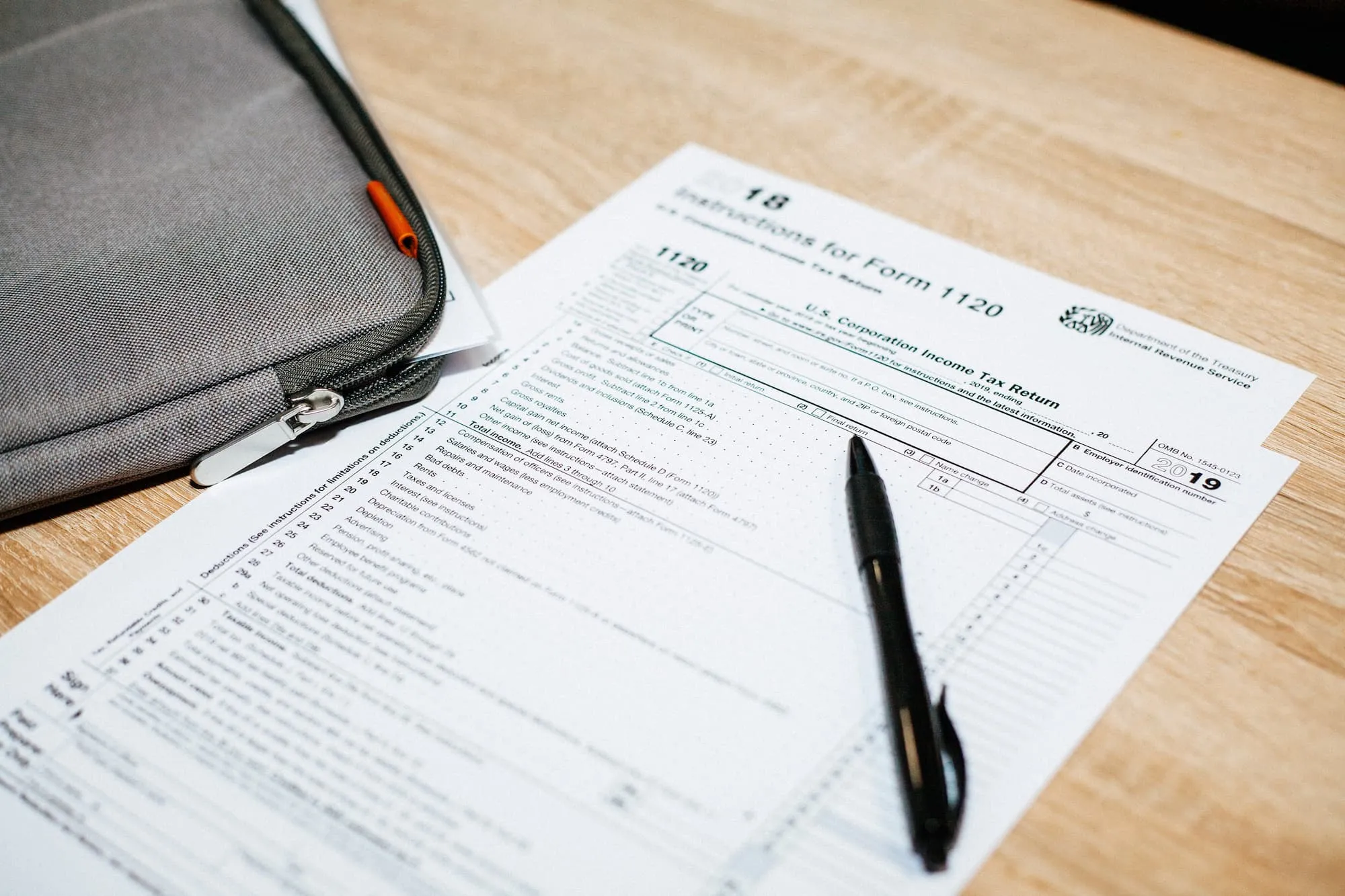
Tax season is the one time of year your Airbnb property can pay you twice — once through rental income, and once through deductions that put real money back in your pocket. The problem is that most hosts leave money on the table. They claim the obvious write-offs (cleaning, supplies) and miss the bigger ones — depreciation, property management fees, home office, and the powerful short-term rental tax loopholes that can offset income far beyond the property itself. This guide covers every deduction available to Airbnb hosts and short-term rental investors in 2026, how to calculate them correctly, and how to avoid the costly mistakes that trigger IRS scrutiny. Awning manages 20,000+ vacation rental properties across all 50 states, and what follows is the tax knowledge we share with every owner in our portfolio.
How Airbnb Income Is Taxed
Airbnb rental income is taxable at the federal level and in most states. How it's taxed — and which deductions apply — depends on how many days per year you rent the property versus use it personally. The IRS classifies your Airbnb under one of three categories:
For most active Airbnb hosts, the second category applies: the property is a rental business, deductions arefully available, and income is reported on Schedule E of your federal tax return.
The 14-Day Rule: When You Owe Nothing
The 14-day rule — sometimes called the Augusta Rule — is one of the most underused provisions in the taxcode. Under IRC Section 280A(g), if you rent your home for fewer than 15 days per year, the rental income is completely tax-free and does not need to be reported. You also cannot deduct rental expenses, but for short seasonal rentals, the tax-free income can be substantial. This rule applies to primary residences and secondary homes alike — making it useful for properties in high-demand seasonal markets that are only rented during peak weeks.
The 15 Biggest Airbnb Tax Deductions
These deductions are available to hosts who operate their Airbnb as a rental business — 15 or more rentaldays per year, with personal use within IRS limits.
1. Mortgage Interest
Fully deductible on Schedule E. Typically the largest single deduction for hosts carrying a mortgage. Your lender issues a Form 1098 each January. Pro-rate if the property is mixed-use.
2. Property Taxes
State and local property taxes on rental property are deductible in full on Schedule E. Unlike personal residences, rental property taxes are not subject to the $10,000 SALT cap — there is no cap.
3. Depreciation
The IRS allows you to deduct the building cost (not land) over 27.5 years. A property with a building value of $275,000 generates a $10,000 annual deduction — every year, without spending a dollar. See Section 4 foradvanced depreciation strategies.
4. Property Management Fees
Every dollar paid to your property manager is fully deductible as a business expense. This includes monthly fees, leasing fees, and performance-based fees. Understanding what you pay in management fees is critical both for evaluating services and maximizing your deduction.
5. Platform Service Fees
Airbnb's host service fee (typically 3%) is a direct cost of earning rental income and is fully deductible. Download your annual earnings summary from Airbnb's Resolution Center each January for a clean record.
6. Cleaning and Turnover Costs
Professional cleaning fees, laundry, linen replacement, and consumables restocked between guests are all deductible. If you clean yourself, you cannot deduct your labor — but cleaning supplies are deductible.
7. Repairs and Maintenance
Repairs that keep the property in working condition are deductible in the year they occur. Upgrades or expansions must be depreciated over time. See the Repair vs. Improvement table below.
8. Utilities
Electricity, gas, water, trash, internet, and cable paid for the rental are fully deductible. Pro-rate for mixed-use properties based on rental days.
9. Insurance Premiums
Short-term rental insurance, landlord insurance, liability coverage, and umbrella policies covering the property are all deductible. When evaluating short-term rental insurance options, the premium you pay is a business expense regardless of which provider you choose.
10. Supplies and Amenities
Toiletries, paper products, coffee, kitchen supplies, linens, and light bulbs purchased for guests are deductible.Keep receipts — these add up significantly over the year.
11. Furniture and Equipment (Section 179)
Furniture, appliances, and equipment may be expensed in full in the year of purchase under Section 179, rather than depreciated over years. Consult your CPA for current limits, which adjust annually.
12. Professional Services
Fees for accountants, tax preparers, bookkeepers, and attorneys handling rental matters are fully deductible. Tax preparation software used for your rental is also deductible.
13. Marketing and Photography
Listing fees on other platforms (VRBO, Booking.com), professional photography, paid advertising, and domain/website costs for your rental are deductible.
14. Travel and Transportation
Travel to the property for business purposes — inspections, repairs, contractor meetings — is deductible at the IRS standard mileage rate. Document each trip's date, destination, mileage, and business purpose.
15. Home Office Deduction
If you manage your Airbnb from a dedicated space used exclusively for rental business, you may qualify. More common for multi-property hosts. A single-property host answering messages from the kitchen typically doesnot qualify.
Repair vs. Capital Improvement — Quick Reference
Depreciation: The Deduction Most Hosts Miss
Depreciation is consistently the largest deduction most hosts never fully use.
Straight-line depreciation: the IRS allows you to deduct the building cost (excluding land) divided by 27.5 years — every year, regardless of profit.
Cost Segregation identifies components that qualify for shorter depreciation lives (5, 7, or 15 years instead of 27.5), front-loading deductions. Worth evaluating for properties valued over $300,000.
Bonus Depreciation allows certain assets to be expensed immediately. The available percentage has shifted with recent legislation — consult your CPA for the current 2026 rate.
For a deeper breakdown of depreciation and STR returns, see short-term rental tax strategy, deductions, and depreciation.
The STR Tax Loophole: Deducting Losses Against Active Income
This is the most powerful and least understood tax strategy available to active Airbnb hosts.
Under normal passive activity loss rules, rental losses can only offset passive income — not your W-2 salary or business income. But there is a significant exception for short-term rentals:
The catch: you must materially participate. The most commonly used tests are spending more than 500 hours/year managing the property, or more hours on it than anyone else.
For a full comparison of STR vs. LTR taxation, see investing in short-term rentals vs. long-term rentals: maximizing tax benefits.
Mixed-Use Properties: How to Pro-Rate Your Deductions
If you use the property personally AND rent it out, you must allocate expenses between personal and rental use using the IRS-approved method:
Costs that are 100% rental-specific — cleaning fees, Airbnb fees, guest supplies — are fully deductible regardless.
Schedule E vs. Schedule C: Which Do You File?
Most Airbnb hosts file on Schedule E (Supplemental Income and Loss) — the standard form for rental income, applicable to the vast majority of short-term rental operators.
You would file on Schedule C only if you provide substantial hotel-like services — daily maid service, meals, concierge. Most Airbnb hosts do not cross this threshold.
For more on income strategy comparisons, see short-term vs. long-term rentals: which brings more profit.
Common Mistakes That Trigger Audits
1. Deducting personal expenses. Days you use the property personally must be excluded. Claiming 100% of expenses on a property you use for weeks each year is a red flag.
2. Missing the land/building split. You can only depreciate the building, not the land. Use your property tax assessment or a qualified appraisal — don't guess.
3. Expensing capital improvements. Replacing an entire HVAC system is a capital improvement, not a repair. Expensing it fully rather than depreciating it is auditable.
4. Claiming the STR loophole without material participation. The active income offset only works if you genuinely materially participate. Log your hours. Using a full-service manager and spending 20 hours/year likely does not qualify.
5. Not tracking mileage and travel. Travel deductions require contemporaneous records — date, destination,mileage, and business purpose. Reconstructed records after an audit are weak evidence.
6. Ignoring state-level occupancy taxes. Many states require hosts to collect and remit occupancy taxes. Airbnb handles most jurisdictions, but you remain responsible for compliance.
For a financial modeling view of hidden costs, see the hidden costs of STR investing.
Frequently Asked Questions
Do I have to report Airbnb income on my taxes?
Yes, if you rent for 15 or more days per year. The exception is the 14-day rule: if you rent fewer than 15 days in a tax year, the income is tax-free and does not need to be reported.
Does Airbnb report my income to the IRS?
Yes. Airbnb issues a Form 1099-K to hosts earning over $5,000 in gross payouts. Even without a 1099-K, you must report rental income — Airbnb shares data with the IRS regardless.
Can I deduct the cost of furniture I bought for my Airbnb?
Yes. Furniture, appliances, and equipment are deductible — either in the year of purchase under Section 179 or depreciated over 5–7 years under MACRS. Keep receipts and note the purchase date and intended use.
What is depreciation recapture tax?
When you sell a rental property, the IRS taxes previously claimed depreciation at up to 25%. A 1031 exchange can defer this indefinitely. This is a key reason to work with a CPA who understands real estate transactions.
Can I deduct property management fees if I use Awning?
Yes. Every fee you pay Awning — the base management percentage, onboarding fees, and platform optimization fees — is fully deductible as a business expense on Schedule E.
What records should I keep for my Airbnb taxes?
Keep all expense receipts, Airbnb payout records (download annually), a log of rental vs. personal use days, mileage logs for property visits, and records of capital improvements. Retain for at least 6 years.
Should I set up an LLC for my Airbnb?
An LLC provides liability protection but does not change how rental income is taxed — a single-member LLC isa disregarded entity. Consult a CPA and attorney based on your specific situation.
About the Author
Sara Levy-Lambert is VP of Marketing at RedAwning, the parent company of Awning.com. RedAwning manages 20,000+ vacation rental properties across all 50 states. Sara has worked at the intersection of real estate, hospitality, and technology for 10+ years.

%201.webp)
%203.webp)


%201.webp)
.webp)